



Twenty years after Christie’s became the first international auction house to set up in the Gulf, the maison is bringing the rostrum to Abu Dhabi. On 1 November, The Abu Dhabi EDITION hosts Mawasim: 20 Years of Modern and Contemporary Middle Eastern Art — the house’s first fine art auction ever staged in the UAE capital, and a statement of intent about where the region’s art market is heading.
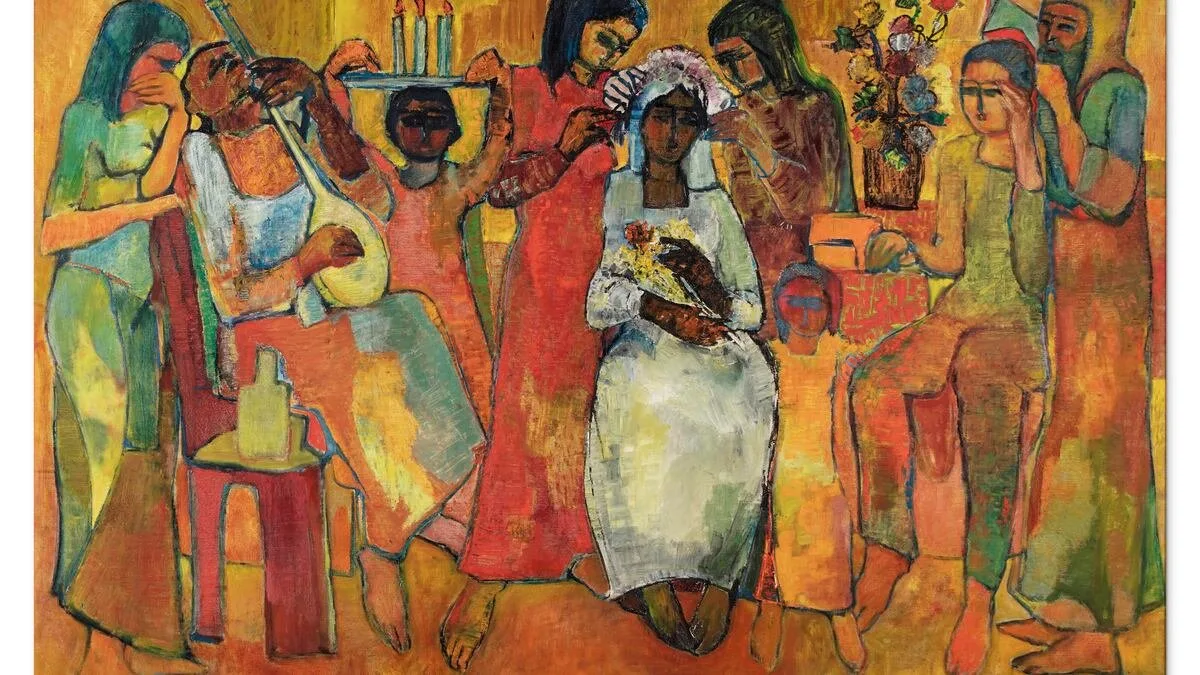
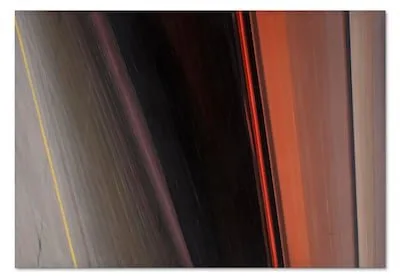
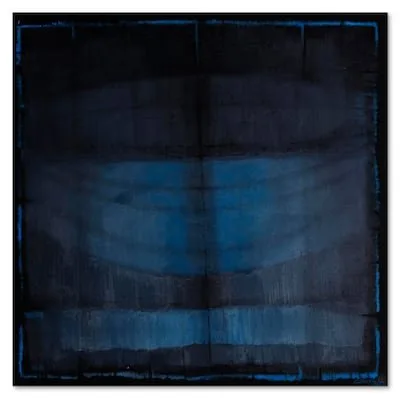
The sale gathers more than seventy works spanning the Arab world and its diaspora — Egypt, Iran, Iraq, Lebanon, Morocco, Tunisia, Palestine, Syria, Turkey, Saudi Arabia and the Emirates — anchored by names that defined the region’s modern canon. Paul Guiragossian’s Noces (1958–59) leads at an estimate of $300,000–500,000, alongside Samia Halaby’s Yesterday (1978) at $200,000–300,000, Mohamed Melehi’s hard-edged A30 (1962) and Nadia Saikali’s luminous Mandala Bleu Nuit (1982). Provenance runs deep: eight works come from Beirut’s storied Dalloul Collection, five from Sharjah’s Barjeel Art Foundation.
The timing is no accident. Mawasim — Arabic for “seasons” — opens what may be the most consequential cultural autumn the capital has seen: the inaugural Frieze Abu Dhabi follows in November, and the Guggenheim Abu Dhabi opens its doors on Saadiyat Island on 11 December. “This event is not a one-off,” says Ridha Moumni, chairman of Christie’s Middle East and Africa. “We are coming with the intention of being more present and more visible in the city.”
For collectors in the region, the previews come to them last: after New York and Paris, the works show in London through mid-October before returning to Abu Dhabi for the sale. Two decades ago, an international auction in the Gulf was a novelty. This November, it is the season itself.

